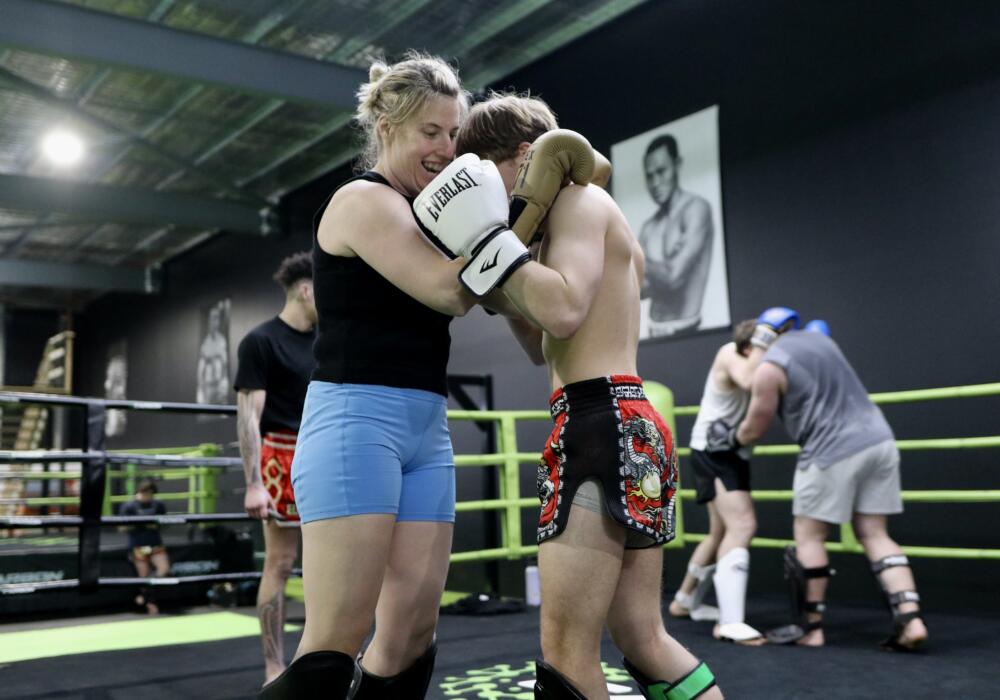
Improving Your Muay Thai Technique: What Not To Do When Clinching
Table of Contents
- What clinching is and why it matters
- Common clinch mistakes
- How to drill better clinch work
- When to use the clinch
- Train Muay Thai in Geelong
- FAQ
Muay Thai Clinch Geelong: What Not To Do
Winning a round often comes down to clinch work, and mastering it takes reps and the right coaching. This article walks through the most common clinch mistakes we see at Carbon Gym and how to fix them.

Common Clinch Mistakes
Reaching with your arms instead of moving your feet. Letting your opponent get inside frame. Squaring up when you should be off angle. Losing posture. All are classic errors. Good clinch work demands posture first, grip second, knees third. The order matters. Rush the grip and you lose the posture.
How to Drill Better Clinch Technique
Start slow with a training partner. Focus on hand fighting, wrist control, and neck ties. Move to pummeling drills. Only add knees once the positioning is clean. Learn more about Muay Thai rules and technique via Muaythai Australia, the sport’s national governing body.
When to Clinch vs When to Stay Out
The clinch isn’t for every round. Use it when your opponent is hurt, slower, or bigger than you and you need to neutralise range. Stay out of clinch when your opponent is stronger inside. Reading these cues takes reps, not theory. Watch for a dropped guard, heavy breathing, or a step that lands short — these are the moments closing the distance pays off. If your opponent circles well and keeps range tight, forcing the entry usually costs more than it gives, since you telegraph the move and eat a knee on the way in. Coaches drill this decision-making live during sparring, building judgement no drill alone can teach.
Train Muay Thai at Carbon Gym
Our classes drill clinch work weekly. Come train Muay Thai at Carbon Gym via our Muay Thai program or claim our intro offer. New members get a short assessment in their first week so coaches know which positions to focus on early. Progress gets tracked informally through sparring rounds rather than belts or grades, so you will notice the difference in how confident you feel under pressure, not just what you can perform on the pads. Bring a drink bottle and a towel — sessions run for an hour and the pace picks up quickly once the class warms into partner work.
Frequently Asked Questions
Is clinch work safe for beginners?
Yes, when taught properly. Coaches drill controlled technique before any hard work.
How long until I can clinch well?
Most members feel competent after 3 to 6 months of consistent training.
Do I need experience to start?
No experience needed. We teach clinch fundamentals from your first session and build complexity gradually as your confidence grows. Most complete beginners feel comfortable drilling basic clinch positions within a few weeks.
What gear do I need before my first session?
A mouthguard and hand wraps are essential from day one, since close-range drills mean the occasional stray elbow or knee. Boxing or MMA gloves both work, though a lighter glove usually gives a better grip for hand fighting. Shin guards are worth adding once you start combining takedowns with strikes. You don’t need anything sport-specific to start, but shorts that allow full hip movement make the positions easier to drill. Most members already own what they need; if you’re starting fresh, our coaches can point you toward gear that suits your build before your first class. If you already box or train BJJ elsewhere, most of your existing kit will transfer over without needing to buy anything new.
Want to drill the clinch live with coaches who compete? Join our Muay Thai classes in Geelong.
Clinch Drills That Actually Work
Ask fighters what they drill most and the answer is usually the pummel. Hand inside, hand inside, hand inside, in a continuous flow. Do 3 rounds of two minutes with a partner and your clinch posture will sharpen fast.
Add break drills next. From pummel, break your partner’s grip and land a knee. Reset and repeat. That’s how a real clinch game gets built, through reps rather than theory.
A Typical Training Week
A typical training week at Carbon Gym looks like this: Monday pad work including clinch entries. Wednesday technical sparring with 2 rounds of clinch-only. Friday full rules rounds where clinch is live. That rotation builds every aspect of the skill.
Members usually say the Wednesday slot is where it clicks. Slow, technical, focused on form. No one is winning. Everyone is learning.
Using the Clinch in a Real Fight
Clinch work is what separates the good fighters from the great ones. Amateurs often skip it. Pros live in it. The difference shows up in the middle rounds when everyone else gasses.
When you spar, practise entering the clinch on purpose. Notice what positions you find yourself in. Work the angles your coach has shown you, and aim to control the exchange instead of just surviving it.
If You’re Just Starting Out
Beginners often avoid clinch work because it feels awkward at first. That is normal. Clinch is the least natural feeling part of the sport at first. It becomes the most strategic part once you settle in.
Give yourself 2 to 3 months of regular clinch drills and you will start enjoying it. By month 6 you will be asking for more.
Authored By: