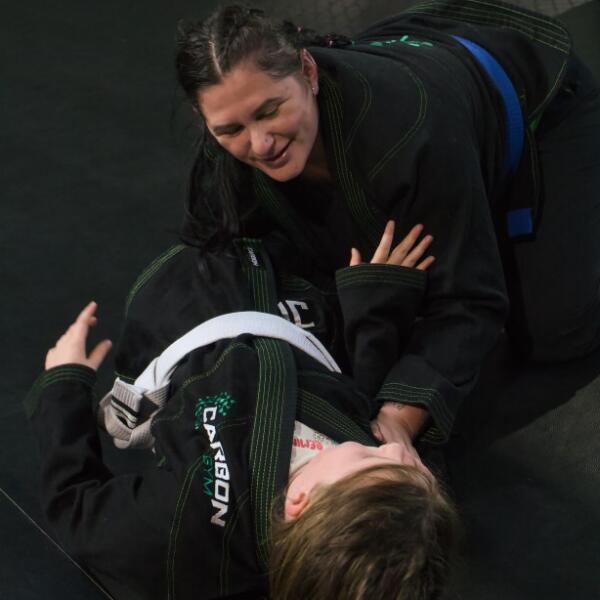
BJJ for Beginners in Geelong: What to Expect at Your First Class
“I was never a fan of the traditional weight and cardio training, and having 15 years of striking experience, Carbon Gym’s BJJ classes really appealed to me. After the first session with Russ (feeling like what my 5 year old must feel like when we wrestle!) it was humbling and hooked me instantly. I needed to learn this. The fact it helped me drop 20kg and build my fitness all while learning something new was an added bonus.” – Dale W, Member
Looking into BJJ for beginners in Geelong? Most people walk in expecting to get thrown around by people who already know what they’re doing. It doesn’t really play out that way. BJJ in Geelong is genuinely one of the more forgiving martial arts to start from zero, and the first class is paced for exactly that: you ease in, nobody’s testing you.
Brazilian Jiu-Jitsu (BJJ) is a grappling martial art. There’s no punching or kicking. You learn to control and submit a training partner using leverage, position, and technique instead of size or strength. That’s why it suits beginners of any age or fitness level.
This guide covers what happens in your first class, what to wear, how often to train, and the real benefits, so you can show up knowing what to expect.
What is Brazilian Jiu-Jitsu?
Brazilian Jiu-Jitsu is a grappling art built on one idea: a smaller, weaker person can control and defeat a bigger, stronger one using leverage and technique. There’s no striking. You use positions, grips, and submissions like joint locks and chokes to win, not power.
That core idea is what makes BJJ so popular for self-defence and so welcoming for beginners. You’re not trying to be the strongest person in the room. You’re learning to use angles and timing. At Carbon Gym, our BJJ program is affiliated with De Been Jiu Jitsu, the first BJJ academy in Australia. Head coach Russ is a first-degree black belt under Peter De Been, and a black belt in Judo too, so you’re learning one step from a lineage that runs Mitsuyo Maeda, to Carlos Gracie Sr, to Carlos Gracie Jr, to Peter De Been, to Russ here on our mats. We run both gi and no-gi.
What happens in your first BJJ class?
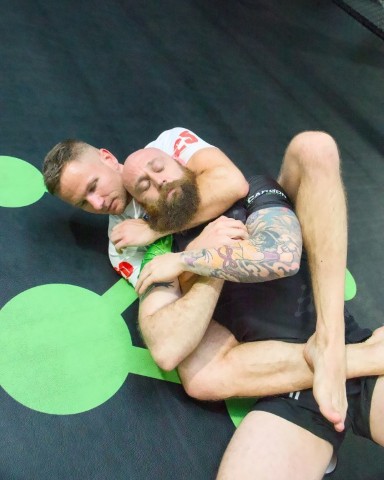
Your first BJJ class is mostly a warm-up, one or two simple techniques, and light controlled practice with another beginner. There’s no fitness test and no pressure to spar hard. Most classes start with movement drills, then the coach shows a basic position, and you practise it slowly with a partner.
In a typical beginner session at Carbon, you’ll warm up with light movement and BJJ basics like hip escapes, learn a technique or two, then try them in slow, controlled practice. Any live practice (called “rolling”) is kept gentle for new students.
“When you arrive for your first BJJ session at the front desk, the team will show you to the mats and introduce you to your coaches, Russ and Jacob. From the outset, the emphasis will be on you being encouraged to participate in a way that makes you feel comfortable, as much or as little as you feel on each session. All of our classes consist of foundational warm-ups that incorporate everyday BJJ movements, some fundamental work to consistently improve our base, and a technique. These are all accessible to people of all skill levels, meaning every time you turn up you’re getting the most out of every moment.” – Rosie S, Staff
Ready to see it for yourself? Claim the intro offer and book your first BJJ class at Carbon Gym. No experience needed, and no one throws you in the deep end.
What should I wear and bring to BJJ?
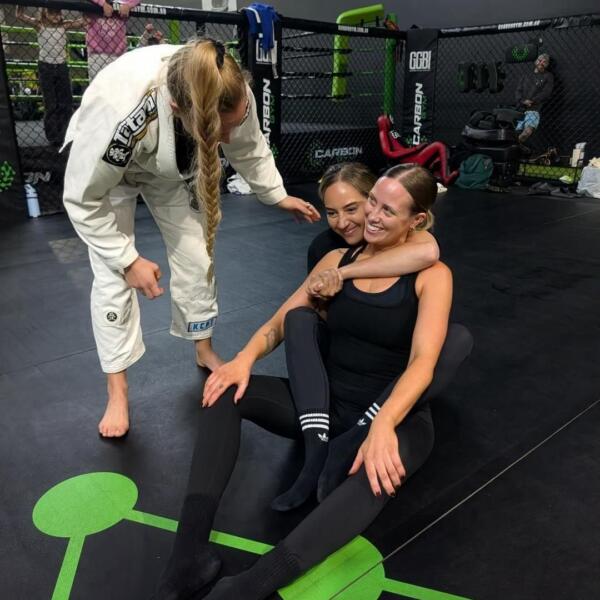
For your first class, wear comfortable athletic gear like a rash guard and shorts, or a t-shirt and gym shorts. Trim your nails, tie back long hair, remove jewellery, and bring a water bottle.
Good hygiene matters in a grappling sport, so clean gear and short nails keep everyone safe. It’s smart to arrive 10 to 15 minutes early to sign in, get changed, and settle the nerves. At Carbon, you don’t need to own a gi to come and try, so wear a rash guard or t-shirt and shorts for your first session, and bring a water bottle. We don’t lend gear, so once you decide to keep training in the gi, you can grab your own.
Do I need to be fit to start BJJ?
No, you don’t need to be fit to start BJJ. You get fit by doing it. Beginners train at their own pace, rest whenever they need to, and build conditioning over the first few weeks. BJJ is for every body type, age, and starting point.
The fitness comes quickly once you start. Research on BJJ training shows clear gains in cardiovascular health, strength, and endurance over time. Conditioning builds as you train, not before. We see it at Carbon all the time. Member Dale came in with no love for traditional cardio, started BJJ with Russ, and dropped 20kg while building his fitness, just from turning up and learning something new on the mats.
Gi vs no-gi: which should a beginner start with?
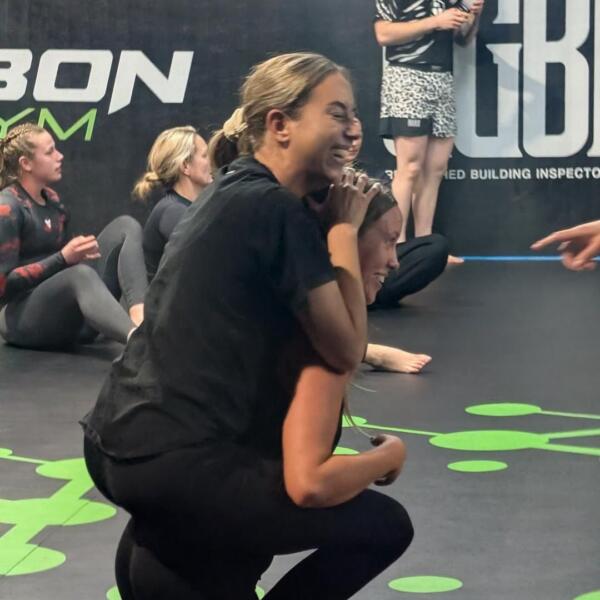
Most coaches suggest beginners start in the gi. The gi is the traditional uniform, and its grips and friction slow the game down so you have more time to think and learn position. No-gi is faster and uses no jacket grips. Many people end up training both.
Starting in the gi builds strong fundamentals: posture, control, and defence. No-gi then adds speed and movement later. There’s no wrong answer, and trying both early helps you find what you enjoy. At Carbon we run both gi and no-gi. BJJ classes run Monday to Thursday at 5:30pm, plus Saturdays at 8am, so check the timetable and pick the days that fit your week.
How often should beginners train BJJ?
Two classes a week is a great starting point for most beginners. It’s enough to learn and improve without burning out, and it leaves time to recover. Consistency beats intensity: people who train steadily for a year or two progress further than people who go hard for a month and quit.
As you settle in, you might add a third session. Early on, the goal is to keep showing up. For a new Carbon member, we’d suggest starting with two BJJ sessions a week and building from there once you’ve found your feet. With classes Monday to Thursday at 5:30pm and Saturdays at 8am, you can check the Carbon Gym timetable and pick the days that suit you.
Is BJJ good for self-defence and mental health?
Yes. BJJ is one of the most practical self-defence arts because it teaches a smaller person to control a larger one on the ground, where many real altercations end up. It’s also strong for mental health. Studies link regular BJJ training to lower stress and a strong sense of community.
The mental side is real. Research has found BJJ helps reduce symptoms of anxiety, depression, and even PTSD, and players consistently rate the community and connection as a top reason they keep training. You come for the skills and stay for the people. That’s true at most good gyms, and it’s something we see at Carbon every week.
Ready to start BJJ for beginners in Geelong?
Your first BJJ class isn’t a test. It’s a warm-up, a few simple moves, and a friendly room full of people who were all beginners once. You don’t need to be fit, flexible, or fearless. You just need to turn up.
If you’ve been curious about Brazilian Jiu-Jitsu, the easiest first step is to try a class. You can see all the details on our BJJ classes page, or claim the intro offer and come meet the team. In your first month at Carbon, nobody’s rushing you. You’ll learn to move, drill the fundamentals with people who remember being new themselves, and walk out a little more confident than you walked in.
Frequently Asked Questions
What age can you start BJJ in Geelong?
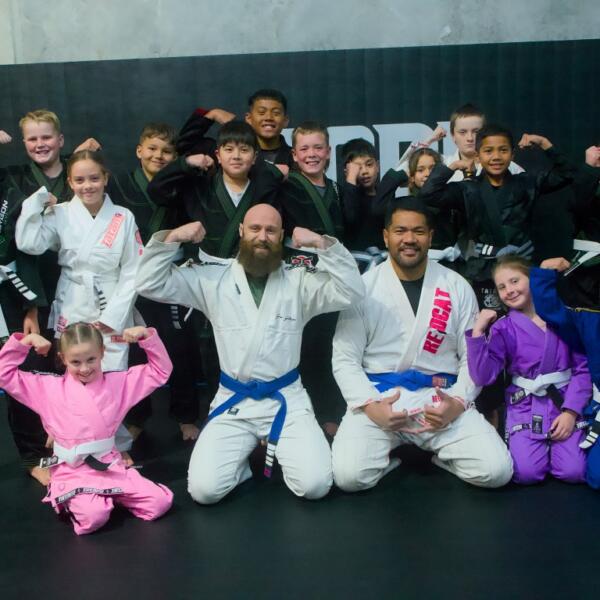
At Carbon, adults can start any time, and we run a dedicated kids BJJ class for ages 8 to 12. You can find more for younger or older kids in our kids martial arts program.
Is BJJ safe for beginners?
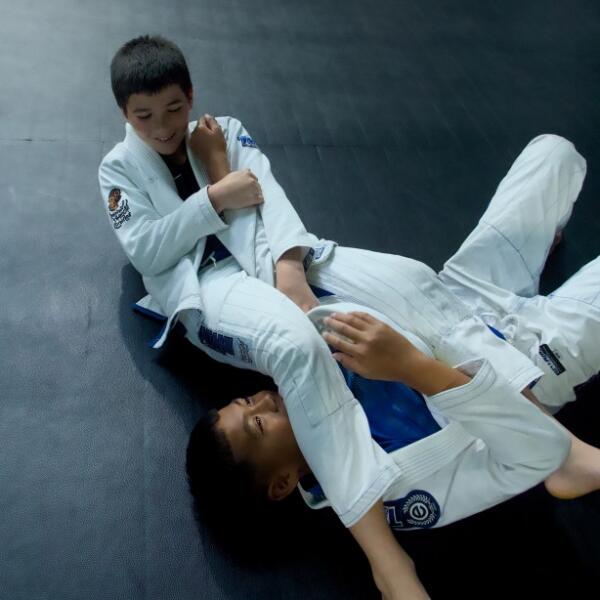
Yes, when trained properly. There’s no striking, and beginners practise slowly with control. Light rolling is supervised and kept gentle for new students. Trimmed nails, clean gear, and tapping early when caught keep training safe for everyone.
How much does BJJ cost in Geelong?
Brazilian Jiu-Jitsu at Carbon Gym runs as part of our class membership, so you can train BJJ alongside boxing, Muay Thai, MMA and the rest of the timetable on the one plan. The easiest way to start is to claim the intro offer and try a class first, then pick the membership that suits you. You can see current options and pricing on our membership page.
How long does it take to get a blue belt in BJJ?
For most people, the white-to-blue belt journey takes around one to two years of consistent training. It depends on how often you train and your focus. The key is steady attendance rather than rushing.
Do I need to be fit before my first BJJ class?
No. You build fitness by training. Beginners go at their own pace and rest when needed. Most people notice better conditioning within the first few weeks of regular classes.
Can women do BJJ?
Absolutely. BJJ’s leverage-based style is built for controlling bigger, stronger opponents, which makes it especially valuable for women learning self-defence and confidence. We have plenty of women training BJJ at Carbon, and everyone trains together, beginners included.